
In the pale light of the blue moon,
the tiger with glassy eyes
behind the wild grasses hide
camouflaged
The foliage of the undergrowth
gleams grey, and ghostly
screens the tiger with
a lacy veil
Need you hide,
you, with all your might?
What secrets lie
beneath the bold stripes?
Have your claws been clipped
your vision suffered?
Or are you waiting to pounce
when the time is right?
Tiger, oh Tiger, do not fear,
emerge from the shadow of your veil
from the cover of the night
of the pale moonlight
and strike!
(For the Poetry Palace, Poets' Rally Week 51)
What does the tiger have to do with lace and how does the blue moon get into the picture? As you can see from the first sub-heading, we are dealing with butterflies, and we shall look into the names of these exotic tropical winged 'fairies'. To me, that's what they are...fairies in our gardens.
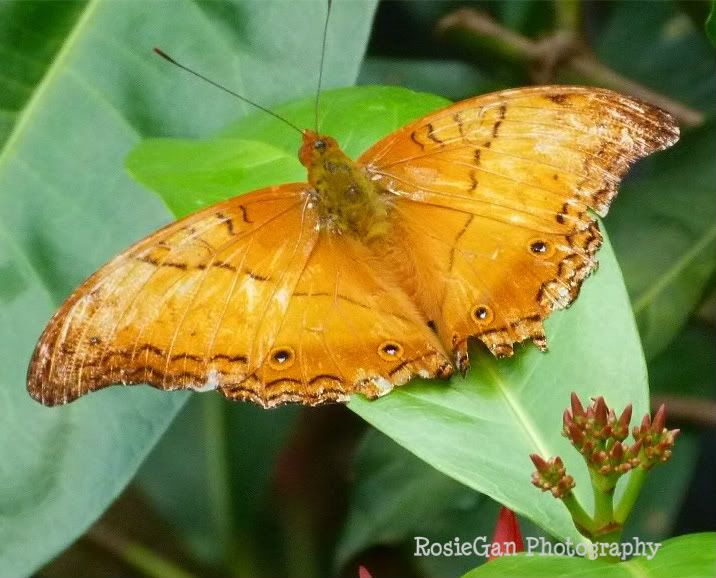
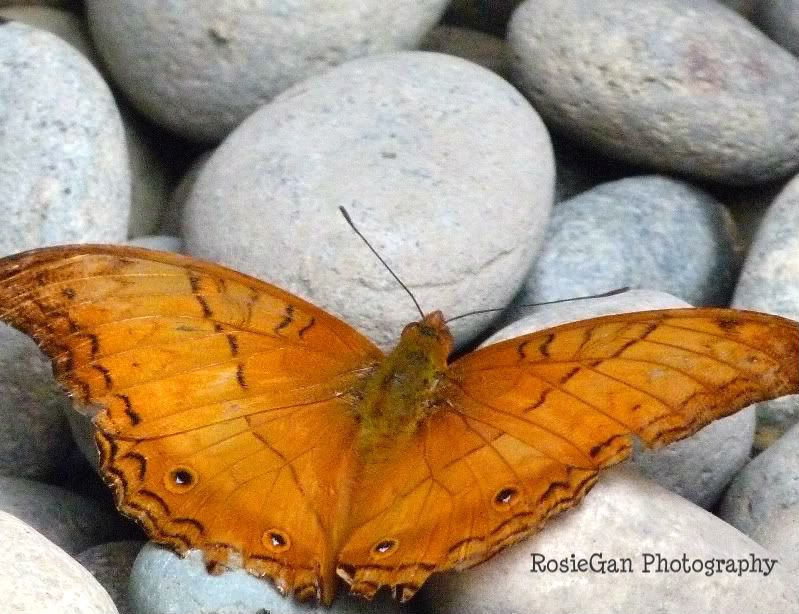
Malayan Lacewing
Cethosia hypsea hypsina
This beautiful creature is a nymphalid butterfly found in the rainforests of Southeast Asia.
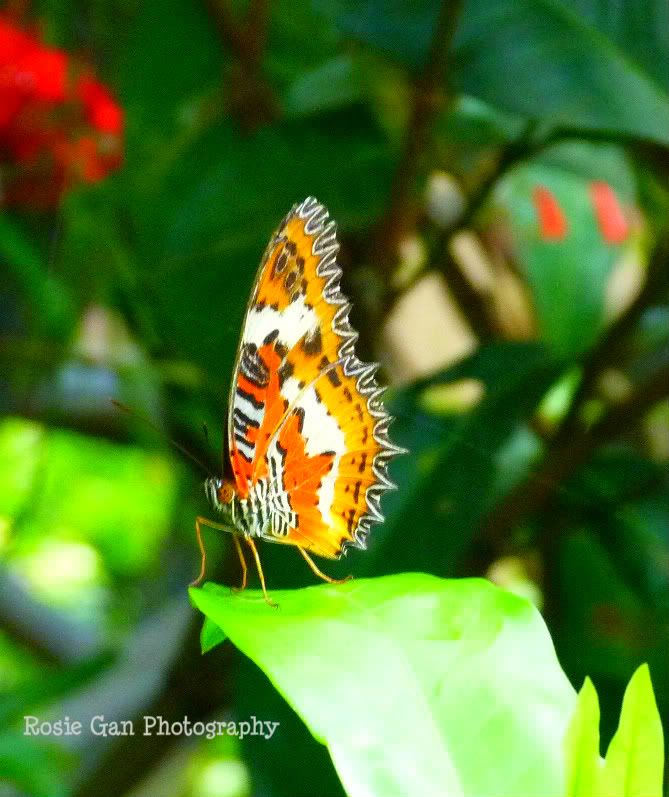
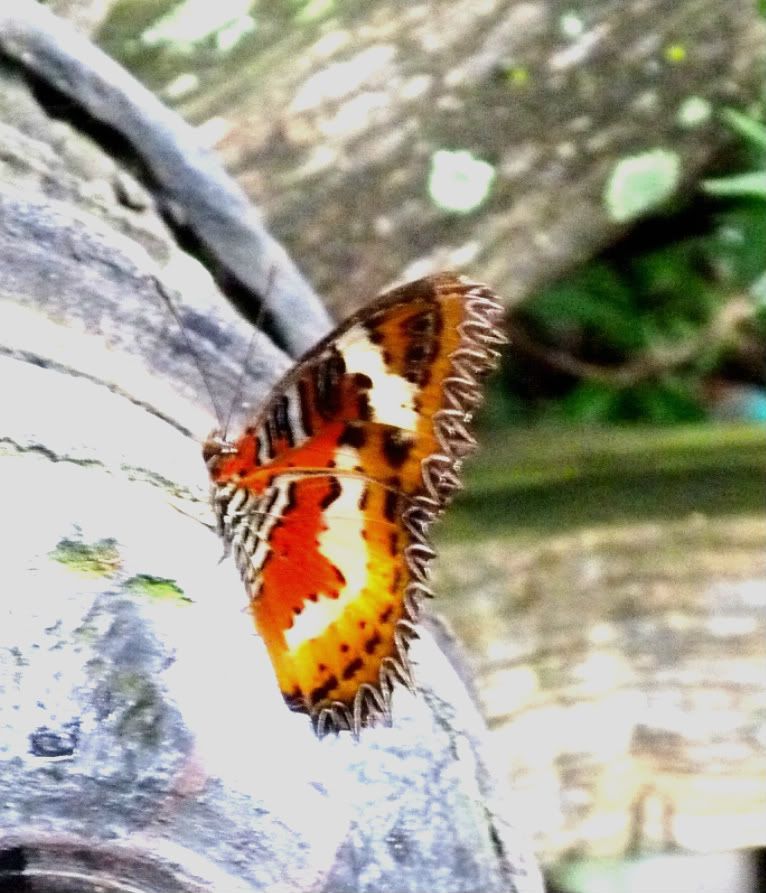

The wingspan of the adult butterfly is 80mm; it is not a large butterfly, but oh, so attractive. It is the underside of the wings of the butterfly that we can see when it rests with its wings folded up. It is this spectacular design, orange-red with a black scalloped border, that distinguishes the butterfly.The white lace-like pattern marking the wing borders is what gives the butterfly its name. A beautiful name...the lacewing butterfly!
The Yellow Glassy Tiger
Parantica aspasia aspasia
The two patches of bright lemony yellow on the hindwings make this butterfly rather attractive. It usually rests hanging on a twig with its wings folded. Fortunately I caught this one on the ground, so its wings were beautifully spread open for the eye of the camera to document every detail of the pattern. The blue patches and the black background combine so well with the yellow contrasting accent.
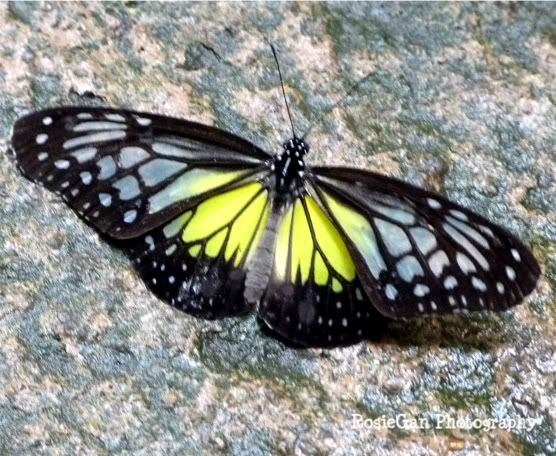
It is a medium-sized butterfly, smaller than the Malayan Lacewing, having a wingspan of only about 60-75mm. You don't need to wonder any more why it is named after a yellow tiger if you look closely at the photograph below. The Yellow Glassy Tiger...an apt name indeed...it has the black and yellow stripes of a Malayan tiger, and the wing seems to be designed for a stained glass window display. That is how I think it got its name.
 |
| This photo is entered for Live Every Moment's Photo Challenge; prompt: Lighting. |
The Clipper
Parthenos sylvia
This is another species of nymphalid butterfly that is found in Southeast Asia, usually in forested areas. It is said to have a flying mode which could be described as 'clipped'. The wings only flap a few degrees up and down while in flight.I am assuming that is why it is named the Clipper. Correct me if I am wrong. Nevertheless, this apparent disability doesn't impede its speed - it can fly pretty fast!
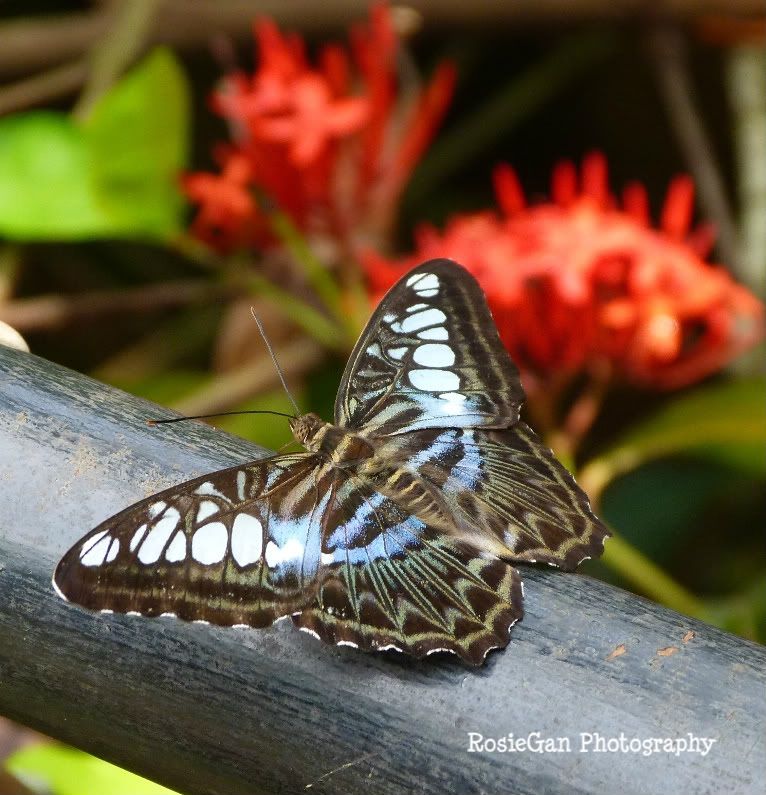
I enjoyed my dalliance with this particular fella in the photograph. It kept landing on this metallic bar, and for hours, I kept returning to that spot to try and get it to fly somewhere else, among the flowers preferably, but it was adamant. Refused to budge. I guess it felt safe, camouflaged there.
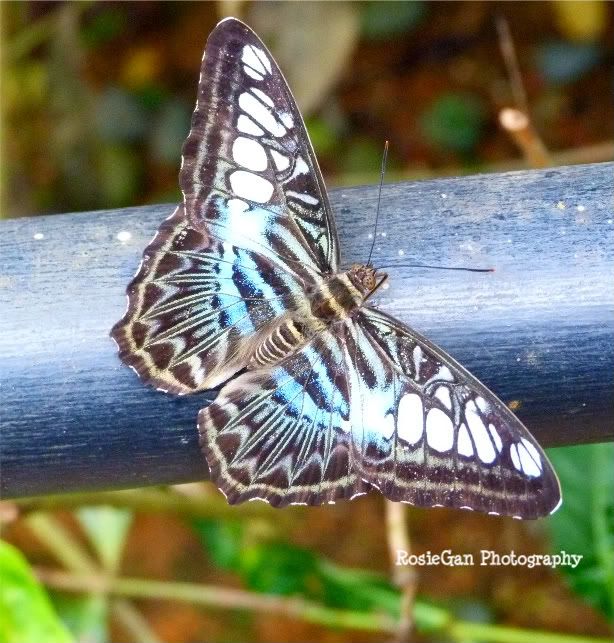
I found a bolder one which had settled on some green foliage...it couldn't be the same fella, could it? They all look alike to me. Oh, and one interesting thing about this species is that the markings of both the male and the female are alike. The male is only slightly larger than the female.

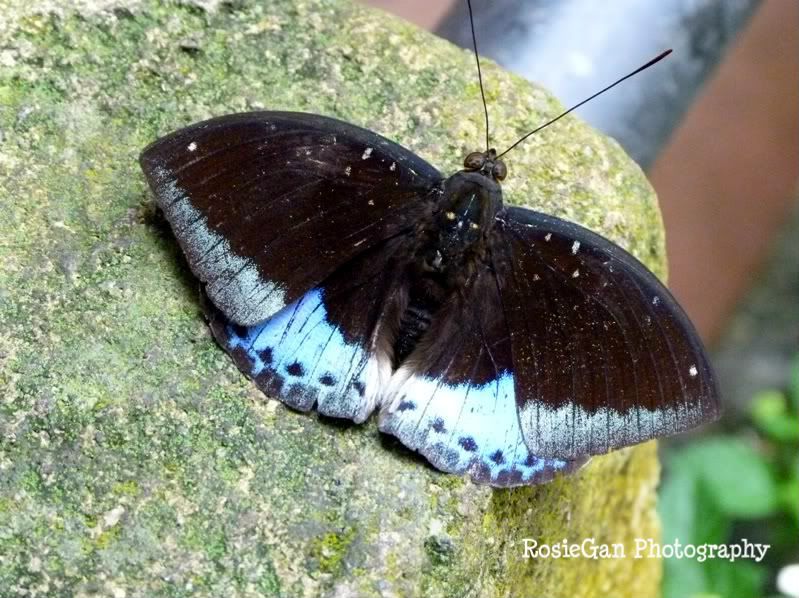
The Great Eggfly/ Blue Moon
Hypolimnas bolina
This species is found not only in Southeast Asia, but also in Japan, Australia and New Zealand. It has a wingspan of 70-80mm.

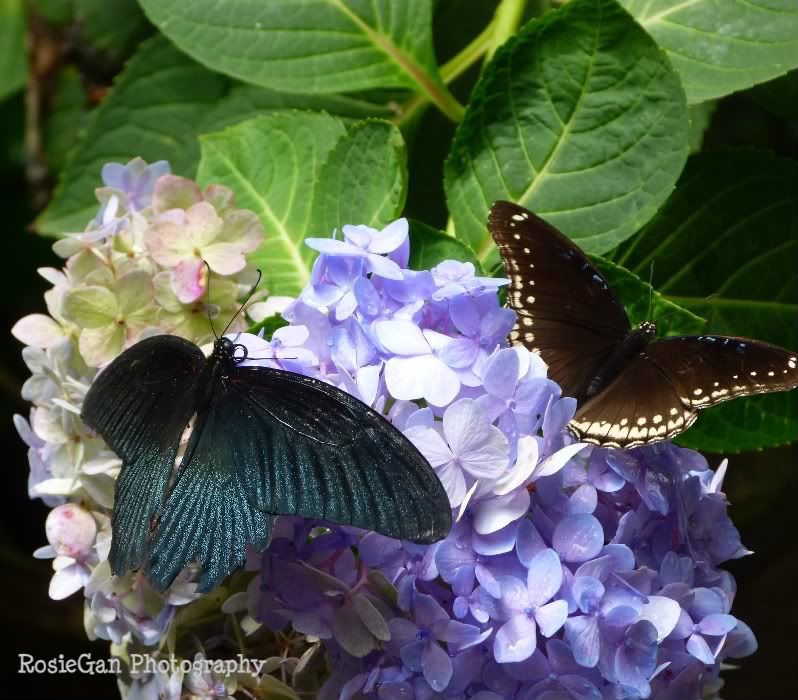
This is the male, which has no resemblance to the female. The upper side of the male has three pairs of white patches upon a black background.The white patches have a rim of bluish purple iridescence, each looking pretty much like a blue moon against a dark night sky! I believe that's why it is known as Blue Moon.

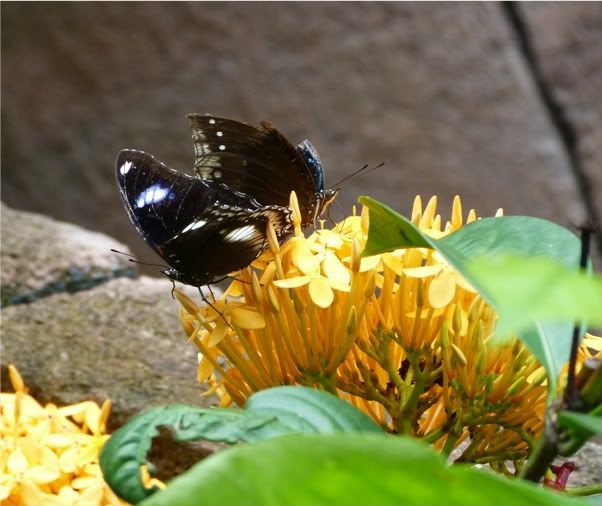
Here you can see both the male and the female. The male is in the foreground, and hiding behind him is the female. Her upper side is brown in colour and she does not have any white patches like the males have.

This concludes my conjectures as to how the butterflies got their names!
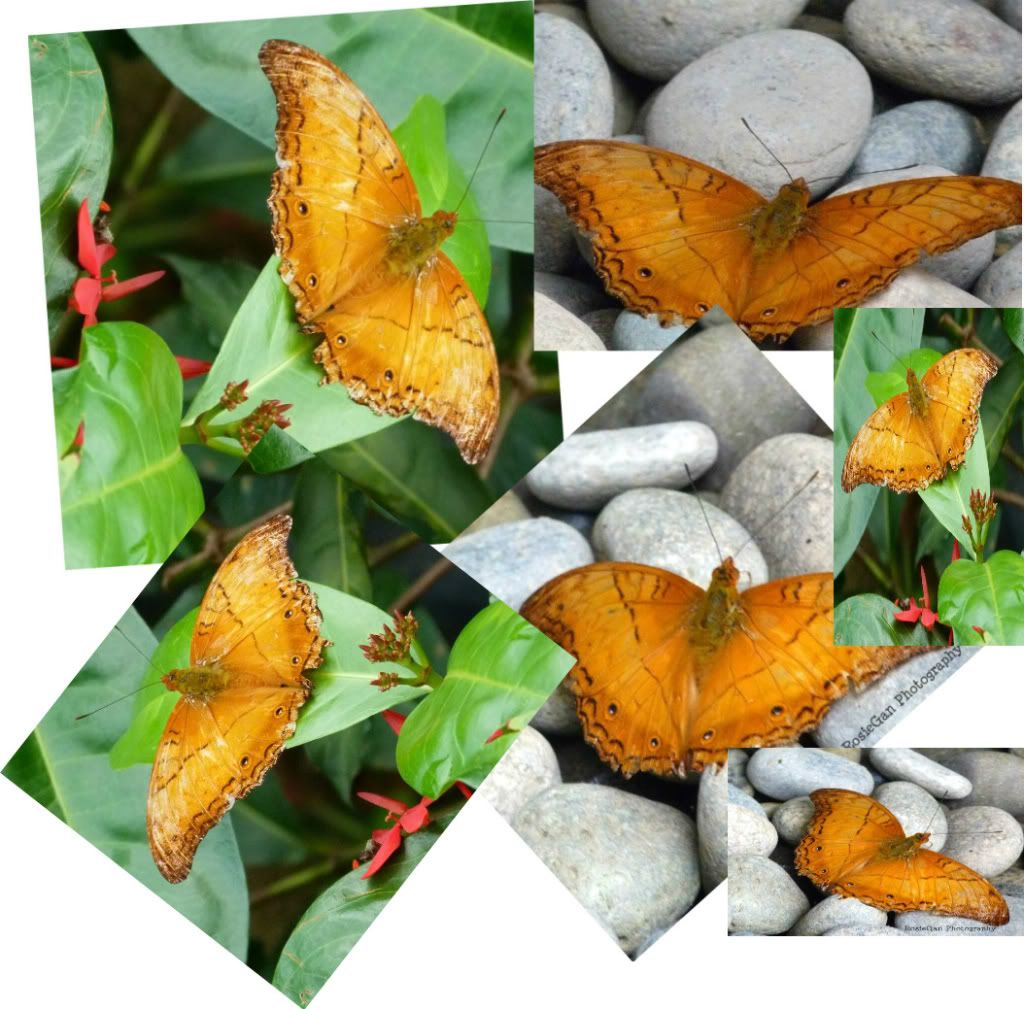
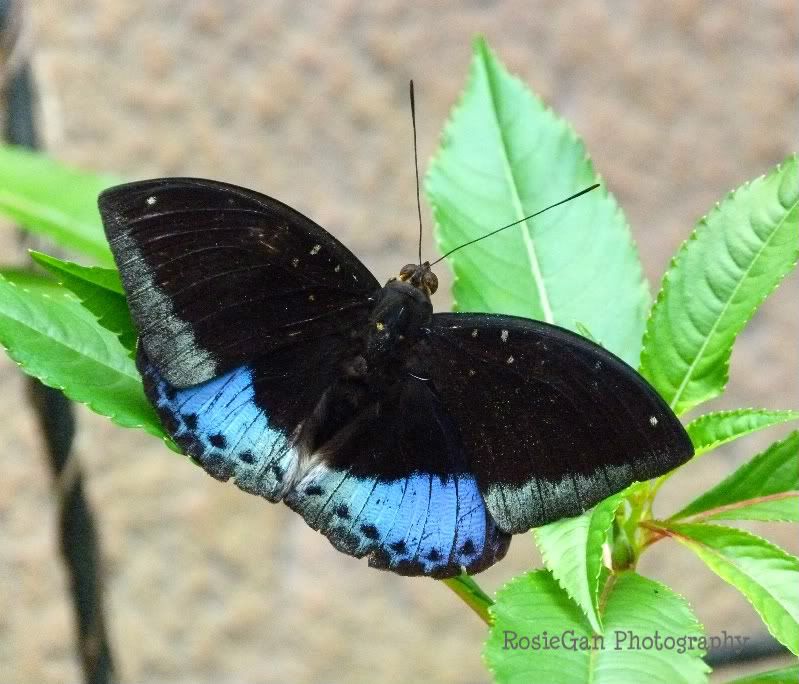
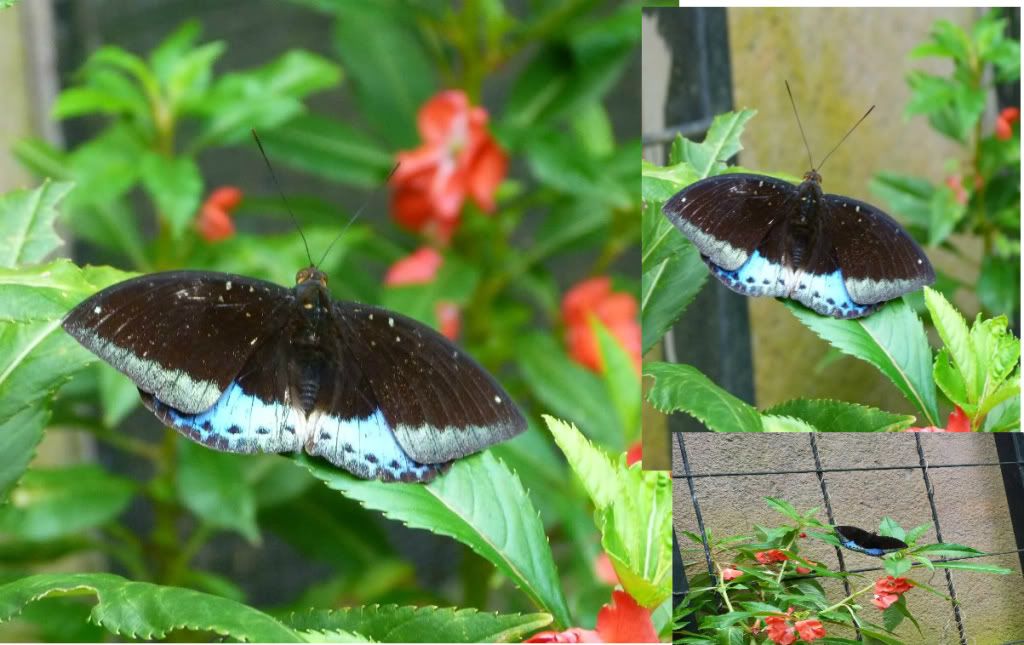
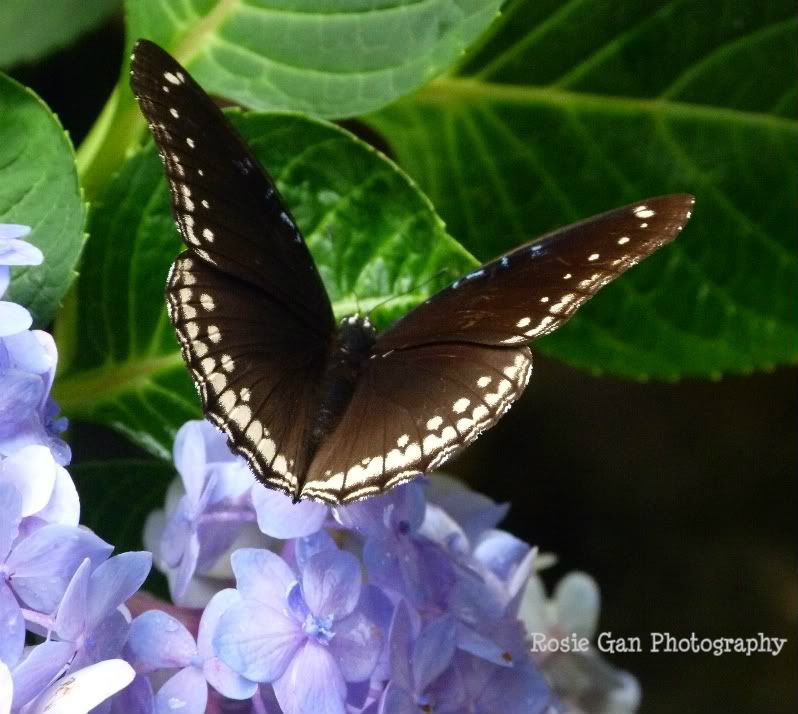
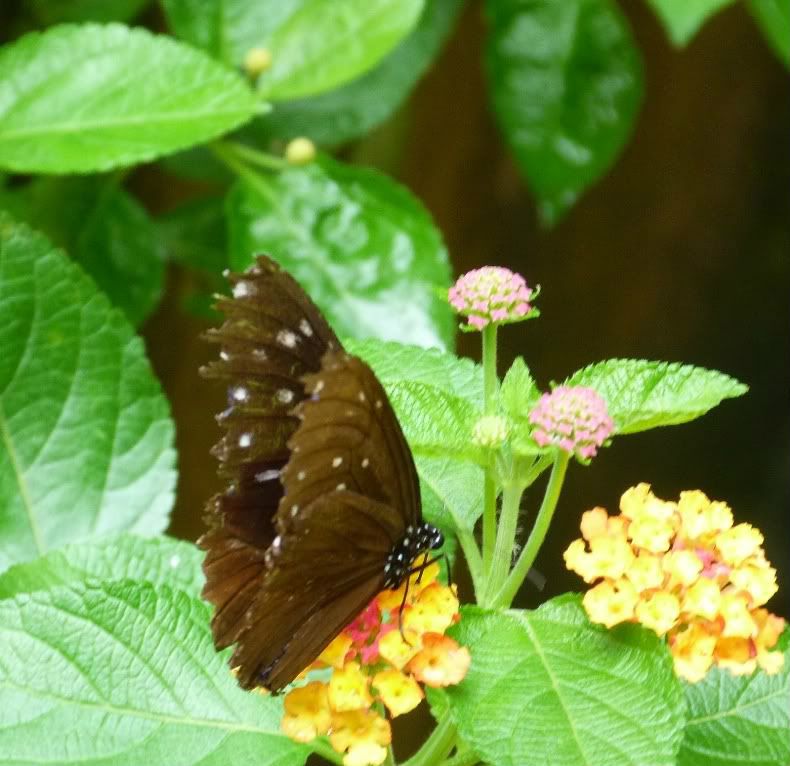
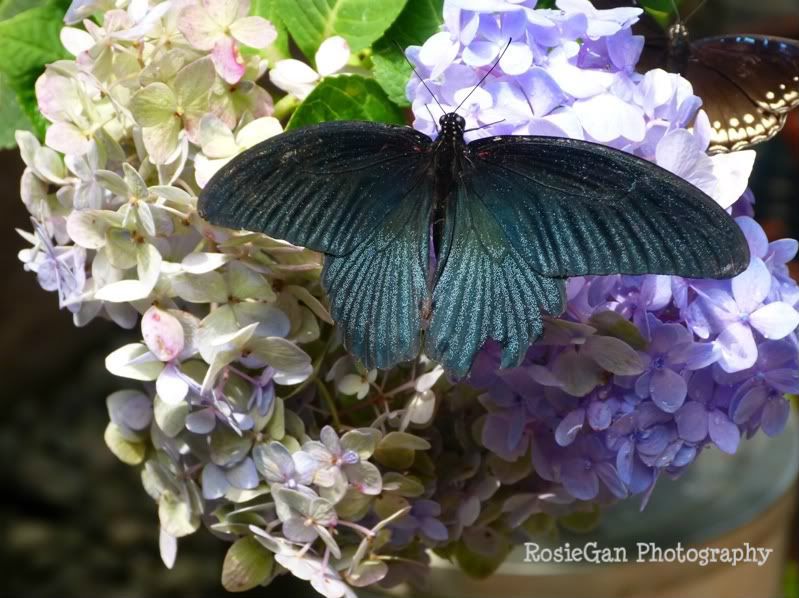
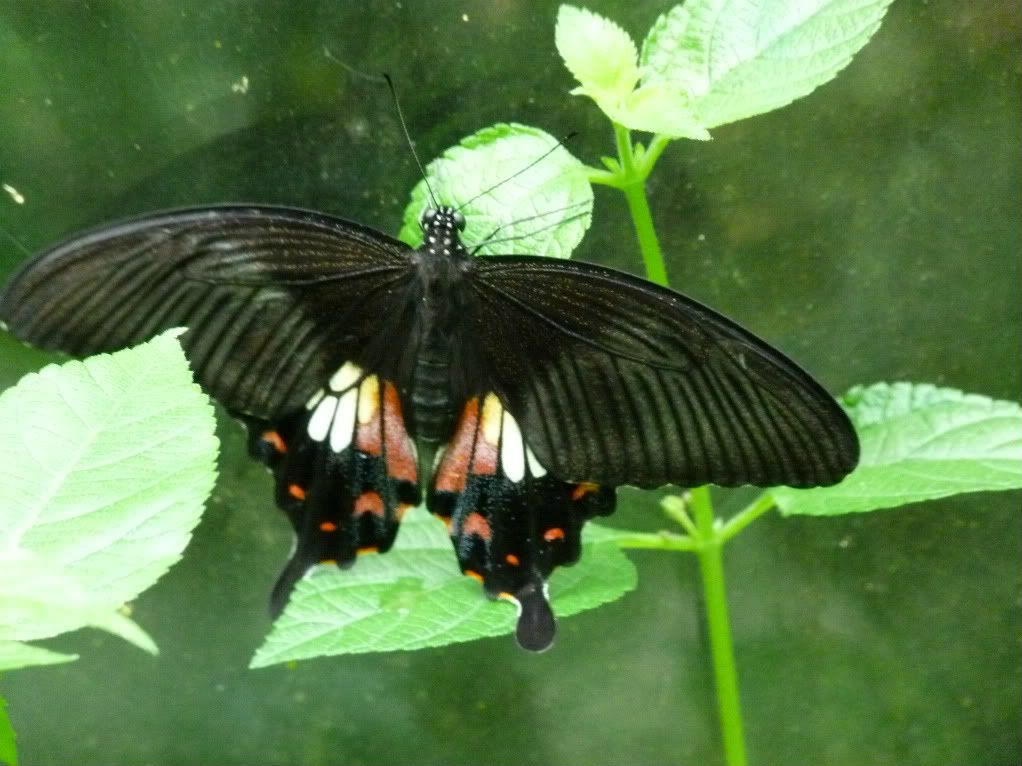
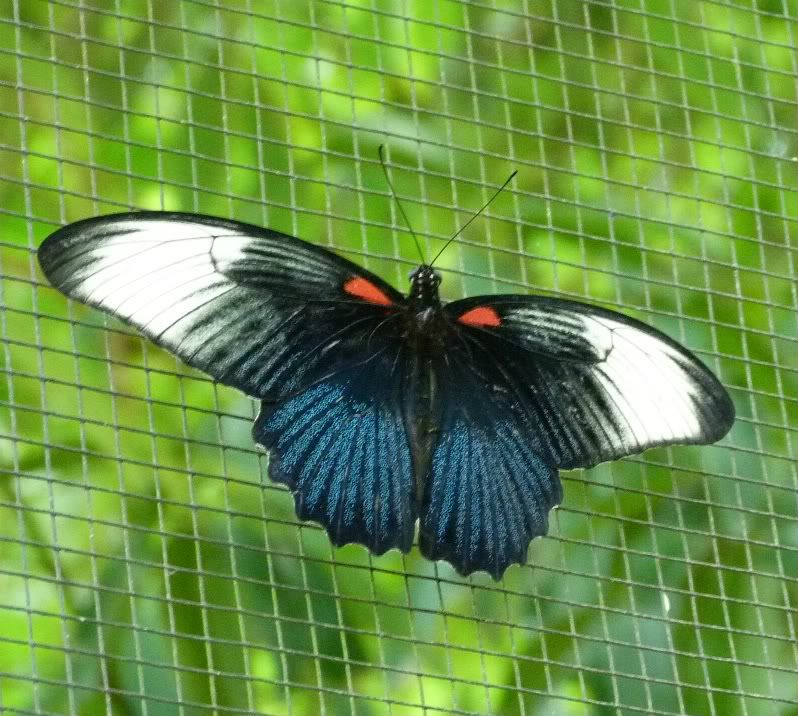
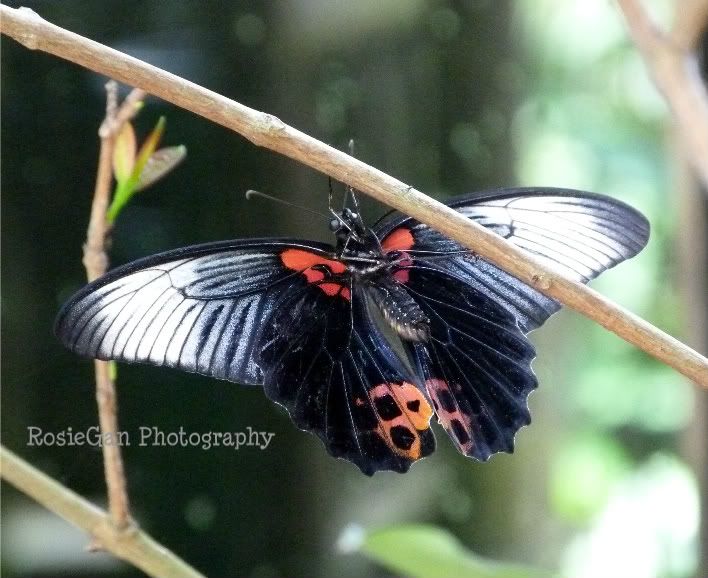
I have managed to identify almost all of the butterflies which I photographed at the Melaka Butterfly Sanctuary, except for a few species. The four butterflies in the collage below, are unknown to me. If any of you out there can identify them, please do leave me a comment.

I yearn to know you
your true self reveal to me
peel off painted mask
(For Haiku Heights #67)
Haiku My Heart
Haiku Heights
Weekend Flowers
Macro Flowers Saturday
Fabulous Friday
Mosaic Monday
Macro Monday
Mellow Yellow Monday
Thursday Poets Rally
Poetry Pantry
Poetry Train Revisited
Share The Joy Thursday
SOOC
Today's Flowers
Postcards